Overview
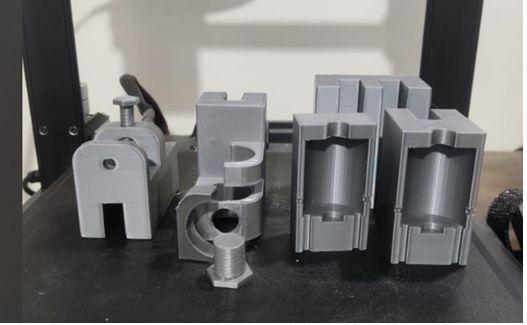
This Fırat University project repurposed a 3D-printing platform as a configurable CNC machine rather than treating the conversion as a single-purpose router. The resulting concept supports interchangeable working heads for wood carving, plastic engraving, and 2D drawing, linking mechanical adaptation with practical CAD/CAM preparation.
The work covered the machine redesign in SolidWorks, vector preparation in Inkscape, JSCut-based G-code generation, Cura movement-path optimisation, and calibration across the documented materials. It was completed with collaborator Anas Alqadhi under the supervision of Assoc. Prof. Dr. Haşim Pıhtılı.
System architecture

The engineering aim was to extend an existing 3D-printer platform into a configurable fabrication system. Instead of assigning one fixed head to the machine, the conversion was structured around an interchangeable-tool concept that maps one motion platform to three documented tasks: wood carving, plastic engraving, and 2D drawing.
Design objective and project context
The project was completed at Fırat University from January to March 2025 with collaborator Anas Alqadhi, under the supervision of Assoc. Prof. Dr. Haşim Pıhtılı. Its scope combined mechanical adaptation, digital toolpath preparation, and workshop-oriented calibration so that a compact machine could be configured around more than one fabrication activity.
Mechanical redesign and interchangeable tooling
The conversion began with a SolidWorks-based mechanical redesign of the original printer arrangement. The design had to preserve the platform's motion capability while making the end effector adaptable to the required tooling. The resulting operating concept accommodates a drill-style engraving head, a heated pen, and a writing pen, allowing the same gantry system to be prepared for different material and mark-making tasks.
Digital fabrication workflow
For two-dimensional work, vector assets were prepared in Inkscape and transferred through JSCut to generate G-code. Ultimaker Cura was used to optimise movement paths, linking the mechanical platform to a repeatable preparation sequence rather than relying on ad hoc manual motion commands. This chain makes the relationship between design input, toolpath generation, and physical execution explicit.
Fabrication and calibration
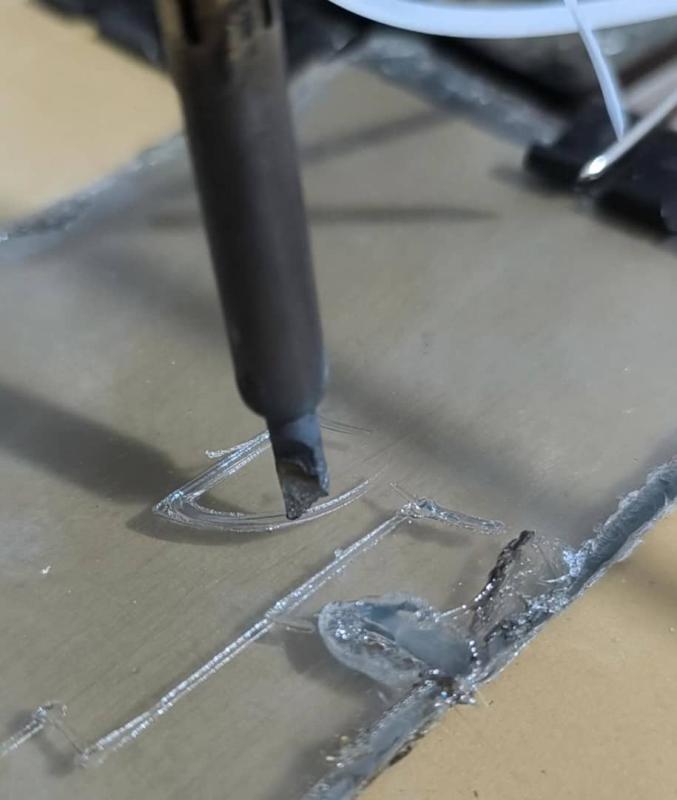
The conversion was calibrated across the materials and tasks documented for the project. This step connected motion settings, tool selection, and the response of wood and plastic workpieces, while the drawing head provided a lower-force mode for two-dimensional output. The emphasis was on practical configuration of a multi-use platform rather than unsupported performance comparisons.
Documented outcomes and next direction
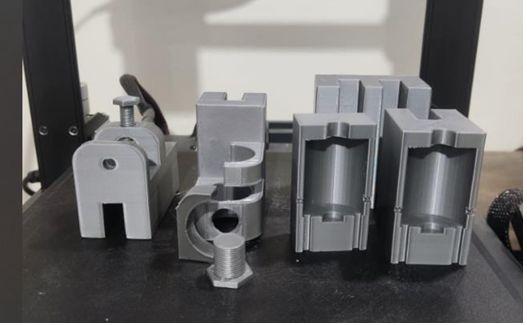
- Converted a 3D-printer platform into a multi-function CNC concept with interchangeable operation modes.
- Established a clear SVG → CAM → G-code → machine preparation path for the documented tasks.
- Recorded calibration work for wood carving, plastic engraving, and 2D drawing.
Future directions proposed in the original project description include AI-assisted engraving and automated tool changing. These are presented as development goals, not as capabilities claimed for the completed prototype.